Disclosure & Review
The receipt carries the reasons. The documents stay with the issuer.
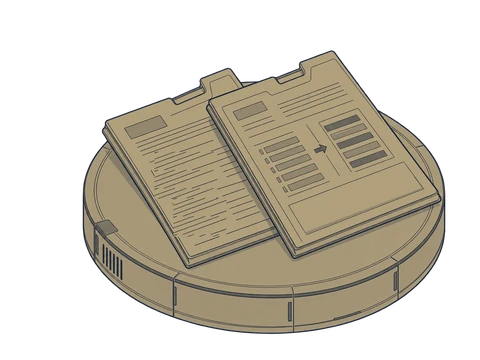
An approval nobody can explain later has to be reviewed again. Each receipt names the policy and version applied and the reason codes behind the outcome, so the explanation travels with the record. A reviewer would see why a check passed, warned, needed review or failed, and follow a figure from one receipt to the next to see what moved, without going back to the issuer. The documents remain in the issuer's custody, and the registry entry carries no evidence.

Principles
How a reviewer would read a receipt.
Coded reasons
The codes show why a check passed, warned, needed review or failed.
Changes between receipts
A reviewer would follow a figure from one receipt to the next and see what moved between them.
Reproducible checks
A second reviewer running the checks on the same bundle, at the same evaluation time, would get the result the first one saw.
Named policies
Outcomes under the same policy could be compared, and a change of policy would be visible.


Disclosure
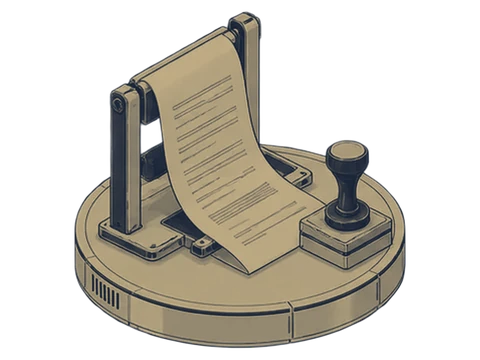
The entry commits to the evidence without carrying it.
The issuer keeps the bundle. The signed registry entry holds just enough for an auditor who is shown the bundle to confirm the two belong together.
With the issuer
- Source documents and canonical inputs
- The asserted figure, such as a NAV or a valuation
- Addresses, tenant data and metrics such as LTV
- The policy pack the issuer authored and applied
- The verification receipt and its summaries
In the registry entry
- Receipt, issuer and entry identifiers
- The issuer key that signed it
- Manifest and receipt hashes
- Policy identifier and version
- Verdict and reason codes
Outside the protocol's scope
- It computes no values and does not judge whether a figure is correct.
- It issues no tokens, puts no evidence on a chain and is not a price oracle.
- It is not a custodian.
- It does not replace a reviewer's judgment or an auditor's opinion.
- It is not a compliance system: no legal opinion, audit or certification stands behind it, and it performs no KYC or AML checks.
Where it applies
Reviews where the evidence cannot go everywhere the figure goes.
In each, a reviewer needs to see how a figure was checked, and the documents behind it go no further than their holder allows.
A fund administrator hands NAV evidence to an auditor between annual audits.
A lender or servicer relies on a collateral valuation it did not produce.
A platform lists a tokenized asset and has to show what supports its figures without publishing the documents.
A compliance team reviewing an asset before it is onboarded needs to know which checks were run, under which policy.

Disclosure limits
Which documents cannot leave, and what must a reviewer still see?
Your answers to those two would decide what a reviewer sees and what stays with you.